
The Children Who Cross Borders Before They Understand Them
A reflection on identity, immigration, belonging, and the lifelong work of integration.
A few months ago, an earthquake shook Venezuela.
Like many Venezuelans living abroad, my phone filled with messages. Family checking on family. Photos. Videos. The familiar uncertainty that follows any natural disaster: Is everyone safe?
As I waited for replies, I found myself thinking less about the earthquake itself and more about what disasters leave behind long after the ground stops shaking.
They reshape more than landscapes.
They alter the course of families.
They accelerate decisions that once felt distant.
And sometimes, without anyone realizing it, they permanently change the developmental path of a child.
The recent earthquake brought me back to another tragedy: the 1999 Vargas disaster, one of the deadliest natural disasters in Venezuela's history. Looking back now as both a therapist and someone who lived through that period, I understand that although my family's hope of immigrating to the United States already existed, that tragedy became part of a series of events that accelerated our journey.
At the time, I thought we were simply moving.
Today I understand that immigration is far more than crossing a border.
It is a developmental experience.
It asks children to reorganize their understanding of home, family, language, relationships, and identity while they are still discovering who they are.
That work often goes unseen.
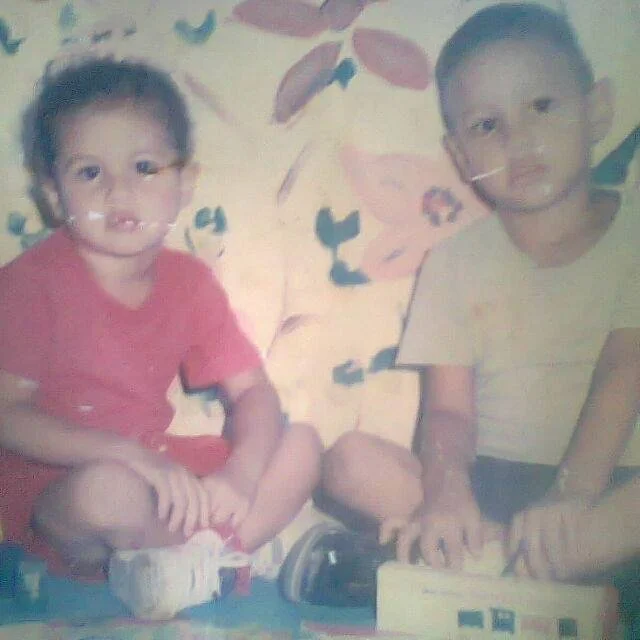
My brother and me in Venezuela, before either of us could have understood how many borders our childhood would eventually cross.
Every time I look at this photograph of my brother and me, I wonder what that little girl would think if she knew how many versions of herself she would one day become.
She did not yet know she carried two countries within her.
My mother is Dominican.
My father is Venezuelan.
To me, none of that felt complicated.
Home was simply where my family was.
Children inherit identities long before they understand them.
My grandmother immigrated from the Dominican Republic to Venezuela years before I was born, bringing my mother with her in search of opportunity. Venezuela became the place where my brothers and I entered the world.
Although I always knew I had Dominican roots, they existed more as family stories than lived experience.
When I was around six years old, I visited the Dominican Republic for the first time.
Not long afterward, we moved there.
People often assume that moving between two Spanish-speaking Caribbean countries must be relatively easy.
After all, we shared a language.
We shared history.
We shared faith.
What could possibly feel so different?
As it turns out, almost everything.
I remember one of my earliest visits to the Dominican Republic when an older relative smiled warmly and said, "Bésame la mano."
I froze.
Growing up in Venezuela, we greeted our elders by asking for their blessing: "Bendición." It was a ritual so natural that I never questioned it.
But no one had prepared me for someone asking me to kiss their hand.
I remember looking at the adult's hand, completely confused, trying to decide whether I was actually supposed to kiss it.
My mother laughed before gently explaining that although the expressions were different, the intention was exactly the same.
Both traditions were gestures of love.
Both reflected respect.
Both connected children to the generations before them.
Looking back now, I smile every time I remember that moment.
It taught me something I would spend years learning:
Culture is not simply the language we speak.
It is the meaning hidden inside ordinary words.
The differences continued around the dinner table.
In Venezuela, mornings often began with warm arepas.
In the Dominican Republic, breakfast became los tres golpes.
Lunch looked familiar enough—rice, beans, meat—but even there I discovered that similarity and sameness are not the same thing.
I grew up eating pabellón criollo; suddenly, the flavors, the seasoning, and even the rhythm of meals felt different.
To someone looking from the outside, these differences might seem insignificant.
To a child trying to understand where she belonged, they felt enormous.
That may be one of the greatest misconceptions about culture.
From the outside, the differences seem small.
From the inside, they shape everything.
Eventually, our family returned to Venezuela.
Soon afterward came the Vargas tragedy.
Not long after that, my mother immigrated to the United States.
My father remained in Venezuela.
Several years later, my brothers and I joined my mother in New York.
Looking back now, I realize that my family didn't simply separate geographically.
My identity did too.
Part of me remained connected to my father, my birthplace, and the country that had raised me.
Another part began growing within my mother's Dominican family in the United States.
For years, I believed people were asking a simple question when they asked, "Where are you from?"
Now I realize they were asking me to compress an entire developmental history into a single sentence.
The truth is that I have never belonged to only one place.
When I arrived in the Bronx, almost everything felt unfamiliar.
I don't remember my first English lesson.
I remember the air.
It was December. Until then, I had never needed a winter coat. The cold was unfamiliar, but so was everything else. The air smelled different. Gone was the scent of salt water carried in from the Caribbean, mixed with warm humidity and the breeze that came off the water each morning. In its place was the smell of winter and a city that seemed to breathe differently, denser, faster, more industrial. Even the trees were fewer. I didn't have the words for it then, but my senses knew I had entered another world.
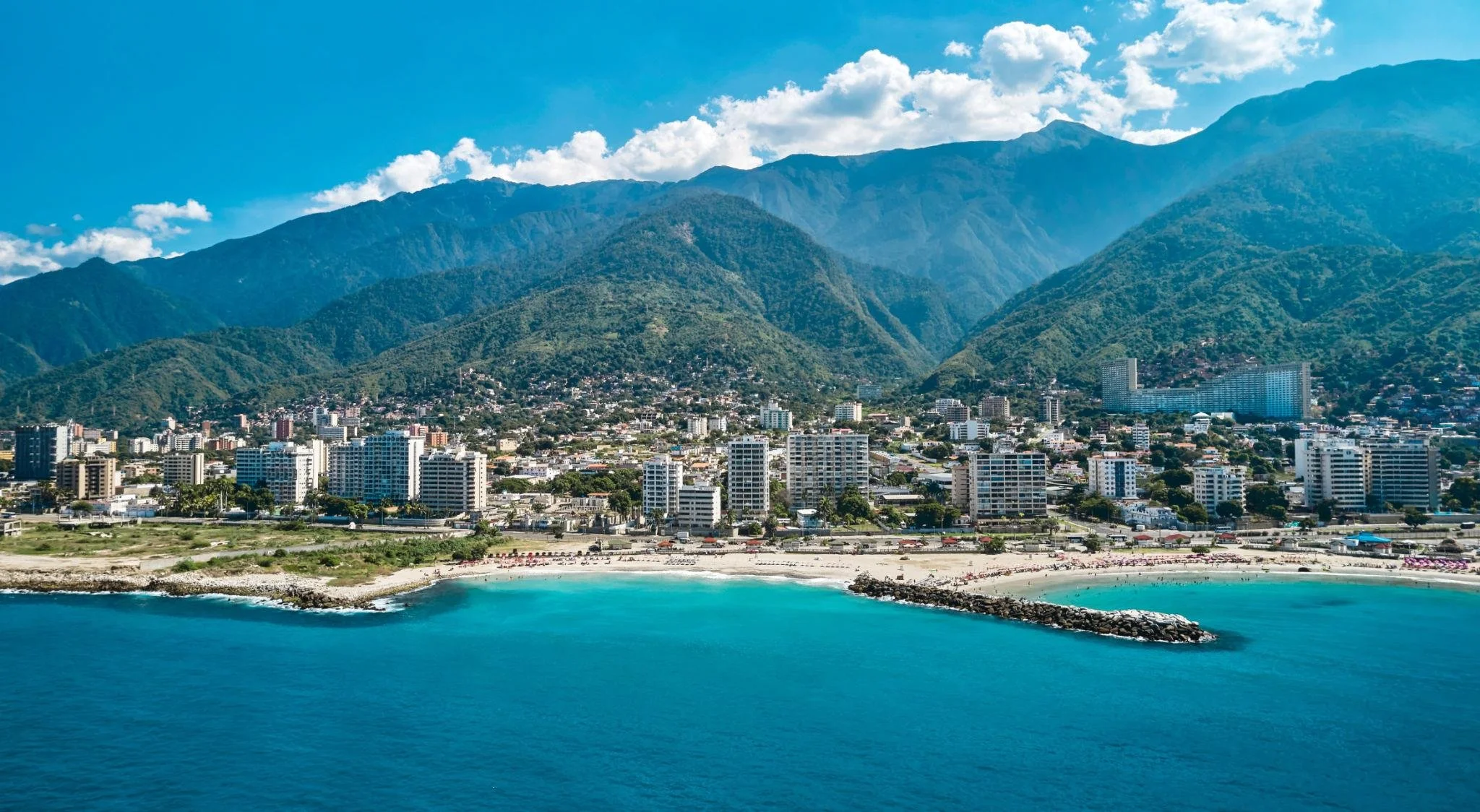
Caraballeda, Vargas State, Venezuela
Every morning in Venezuela, I woke to the Caribbean Sea.
I didn't know that one day I would miss something I had never consciously appreciated.
The ocean disappeared so quietly that I don't remember saying goodbye to it.
As children, we rarely know when we are saying goodbye for the last time.
I was younger than many of my classmates.
I entered high school at thirteen.
Developmentally, I was still very much a child.
Socially, I was surrounded by teenagers whose experiences often felt years ahead of my own.
Again, I found myself translating.
Not only language.
Myself.
I translated my accent.
My humor.
The way I understood respect.
The stories I told about my family.
The way I introduced myself.
Every environment required another version of me.
At the time, I believed adaptation meant leaving parts of myself behind.
Now I understand something different.
Healthy development is not about replacing one identity with another.
It is about integration.
Integration is the gradual process of allowing different parts of ourselves to coexist without asking one to disappear.
I did not stop being Venezuelan when I embraced my Dominican heritage.
I did not become less Latina when I learned English.
I did not lose my childhood simply because I entered a different culture.
Each experience became another layer.
Development, I have come to believe, is less about becoming someone new than about learning how to integrate every version of ourselves with compassion.
Learning English transformed my life.
It also transformed the way I think.
Years later, reading about bilingualism helped me understand something I had experienced long before I had words for it.
Being bilingual is not simply knowing two languages.
It is learning to organize memories, emotions, relationships, and identity through multiple cultural frameworks.
Some memories still arrive only in Spanish.
Others emerge naturally in English.
Some feelings seem to exist only in one language.
Neither language is more authentic.
Each carries different pieces of my life.
Perhaps this is true not only of language, but of identity itself.
Education became another migration.
Financial aid opened doors my family could not have opened alone.
Years later, I found myself sitting in classrooms where I was often one of very few Hispanic students.
Those experiences taught me that intelligence is universal. Opportunity is not.
Today, raising my own children in a different community, I see those differences through another lens.
The opportunities available to children -the quality of schools, extracurricular activities, access to sports, music, nature, mentorship, and enrichment- vary tremendously depending on where they grow up.
These differences accumulate quietly over time.
Children adapt.
They almost always do.
But we should never confuse adaptation with equity.
As both a therapist and someone who has lived this journey, I often think about the children whose immigration stories are still unfolding.
Children who did not choose to leave one country for another.
Children navigating unfamiliar classrooms while missing grandparents they cannot easily visit.
Children translating for adults before they fully understand their own emotions.
Children wondering whether speaking with an accent means they somehow belong less.
We often celebrate children's resilience.
Perhaps too quickly.
Resilience is extraordinary.
But resilience should never become an excuse for overlooking the extraordinary developmental work we ask children to do.
Migration is not only a political process.
It is not only an economic process.
It is also a developmental process.
It asks children to reorganize attachment, identity, language, belonging, and hope; all while they are still discovering themselves.
That deserves our attention.
Not our assumptions.
Not our stereotypes.
Our attention.
People still ask me where I am from.
Today my answer is both simpler and more honest.
I was born in Venezuela.
I carry Dominican roots through my mother.
I was shaped by both countries.
I was educated in New York.
I now raise children who inherit every one of those histories.
For many years, I believed identity required choosing.
Today, I believe it requires integrating.
Perhaps the same is true of human development.
Whether we are talking about culture, family, language, grief, healing, or even the ways we make meaning throughout our lives, growth rarely asks us to erase what came before.
Instead, it invites us to weave our experiences into a more coherent whole.
Integration, not perfection, may be one of the deepest expressions of human development.
When the earth shakes in Venezuela, I no longer think only about damaged buildings.
I think about the children whose lives may have quietly changed forever.
I wonder which families will postpone a dream.
Which will decide they can no longer wait.
Which children will one day look back and realize that what felt like a single move became a lifelong journey of becoming.
If there is one hope I carry forward from my own story, it is this:
Children do not choose borders.
Adults do.
Our responsibility -as parents, educators, clinicians, neighbors, and communities- is not simply to help children adapt to new places.
It is to create the conditions where every part of who they are is welcomed, valued, and allowed to belong.
Because perhaps belonging is not finding a single place to call home.